
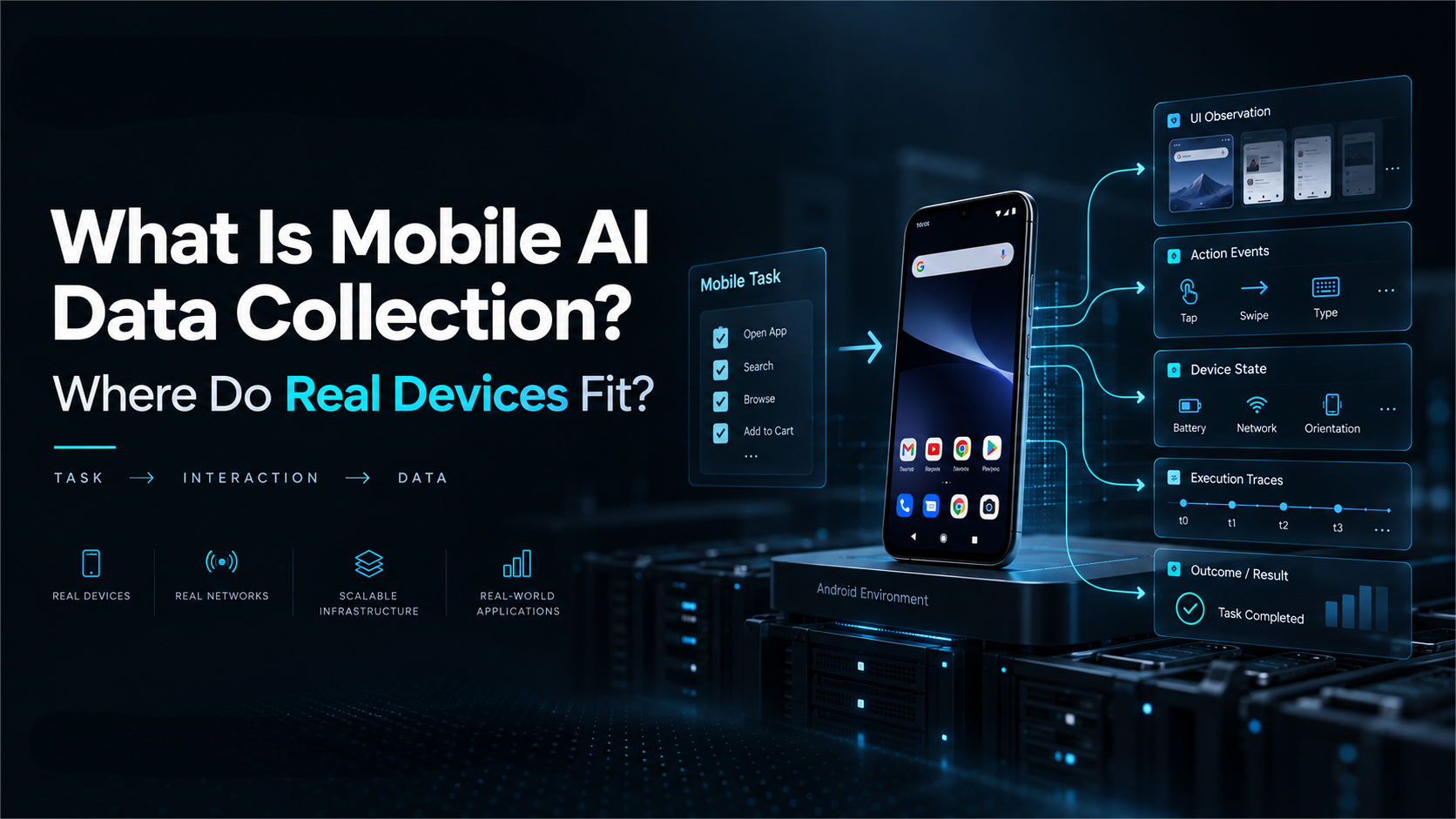
 Mobile AI Data
Insights
Technical perspectives for Mobile AI infrastructure.
Technical perspectives on Mobile AI, real-device execution, data collection, evaluation, and Android infrastructure.
Mobile AI Data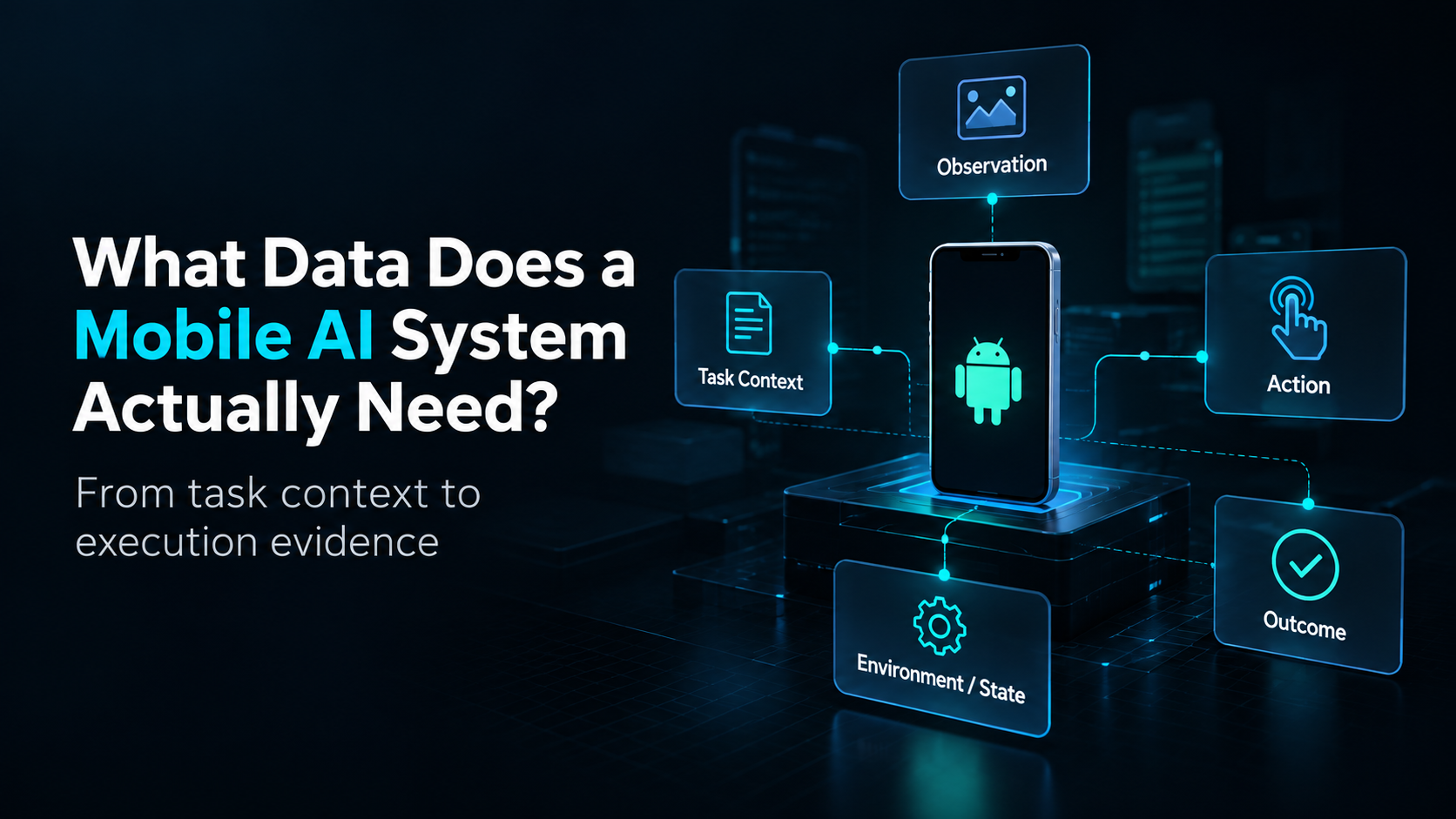 Mobile AI Data
What Data Does a Mobile AI System Actually Need?
A useful Mobile AI data record should explain what the task was, what the agent observed, what it did, where the interaction happened, and what happened next.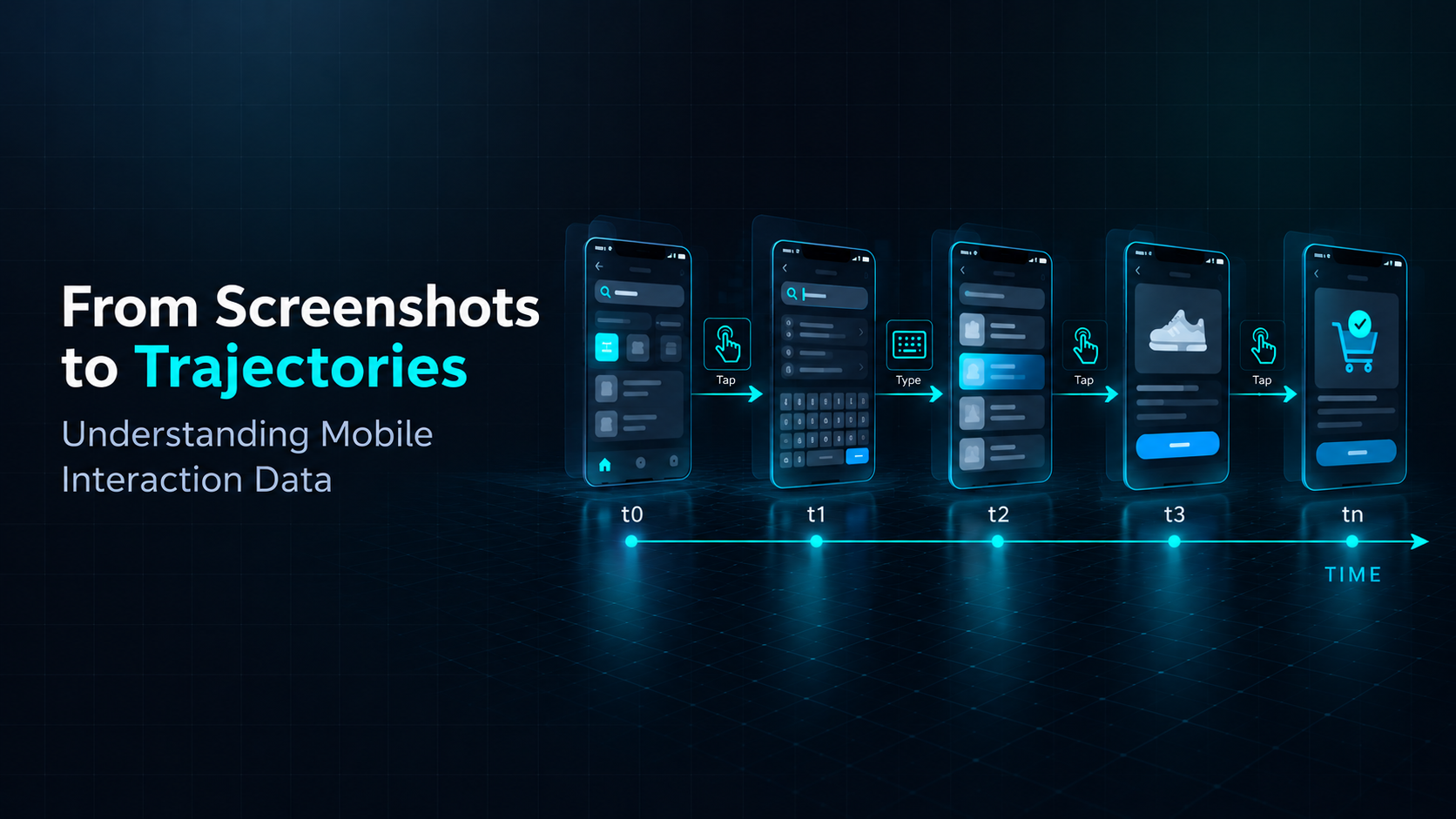 Mobile AI Data
From Screenshots to Trajectories: Understanding Mobile Interaction Data
A mobile interaction trajectory preserves more than individual screenshots. It connects observations, actions, and state changes in the order they occurred, turning isolated records into an interaction history.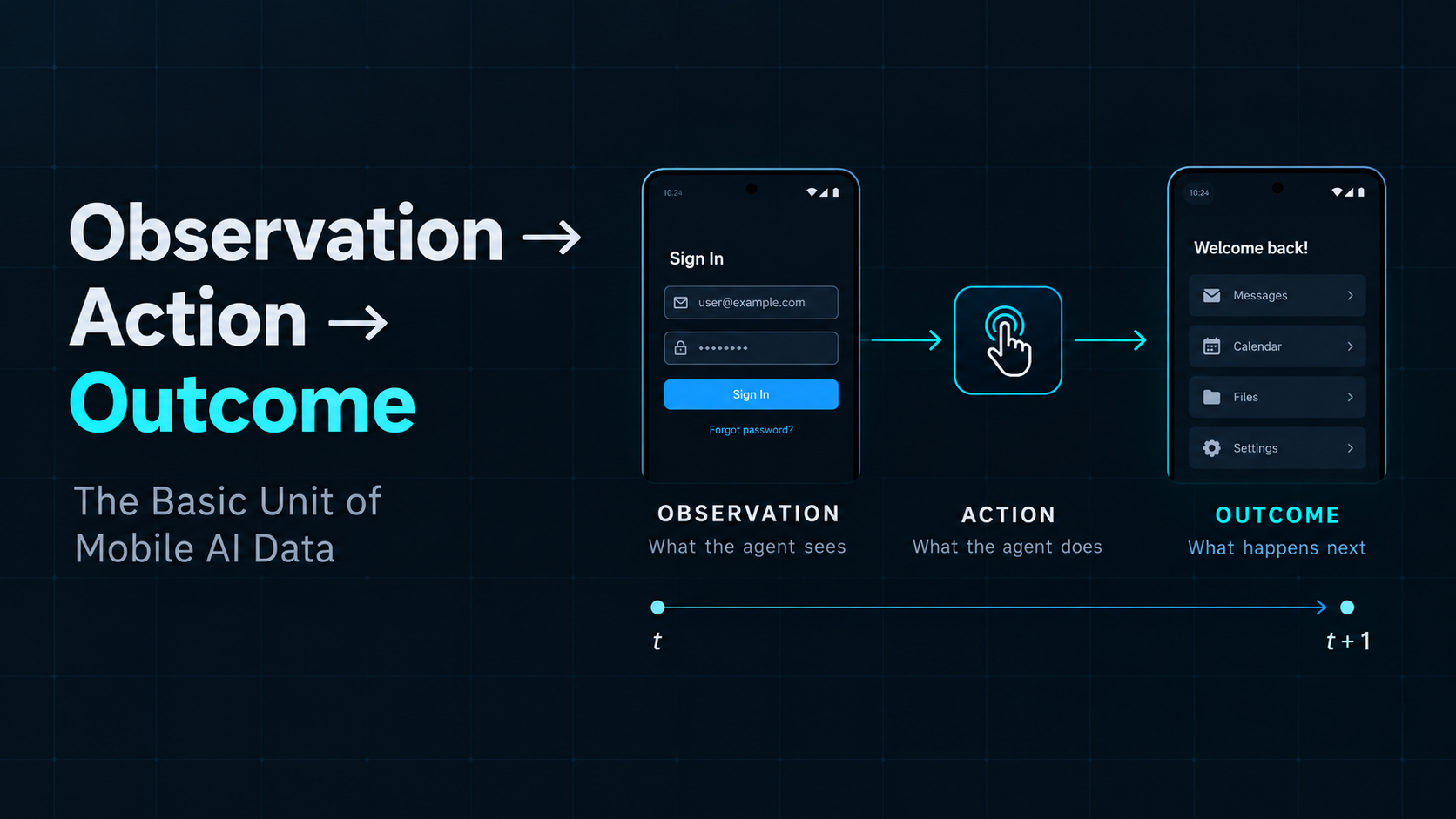 Mobile AI Data
Observation → Action → Outcome: The Basic Unit of Mobile AI Data
A Mobile AI action becomes more meaningful when it is connected to what the agent observed before it and what happened afterward. Observation, action, and outcome form a useful unit for understanding mobile interaction data.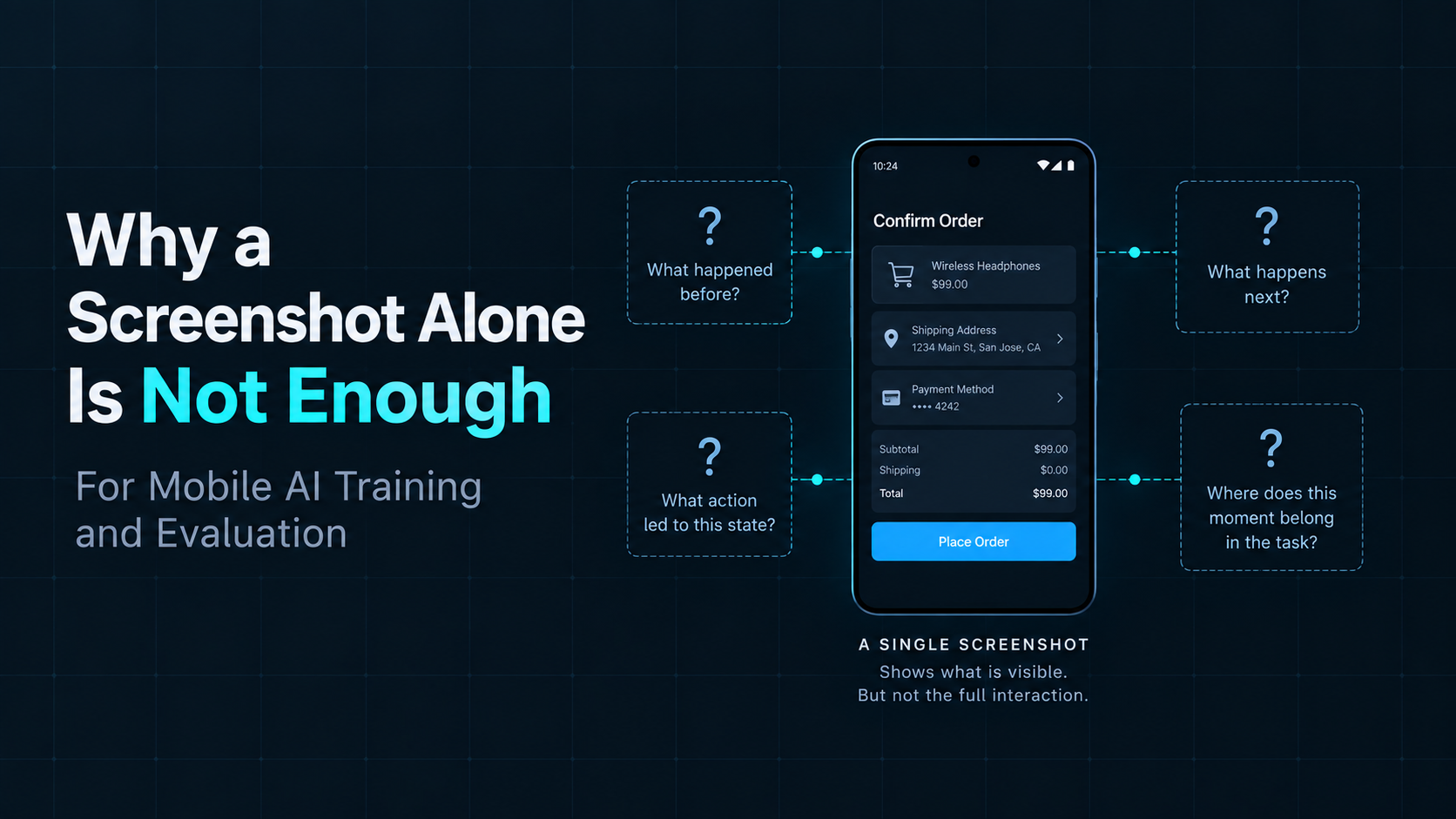 Mobile AI Data
Why a Screenshot Alone Is Not Enough for Mobile AI Training and Evaluation
A screenshot can preserve what was visible at a moment, but it cannot by itself preserve the interaction around that moment. Mobile AI data becomes more useful when screenshots are connected to actions, state changes, and interaction history.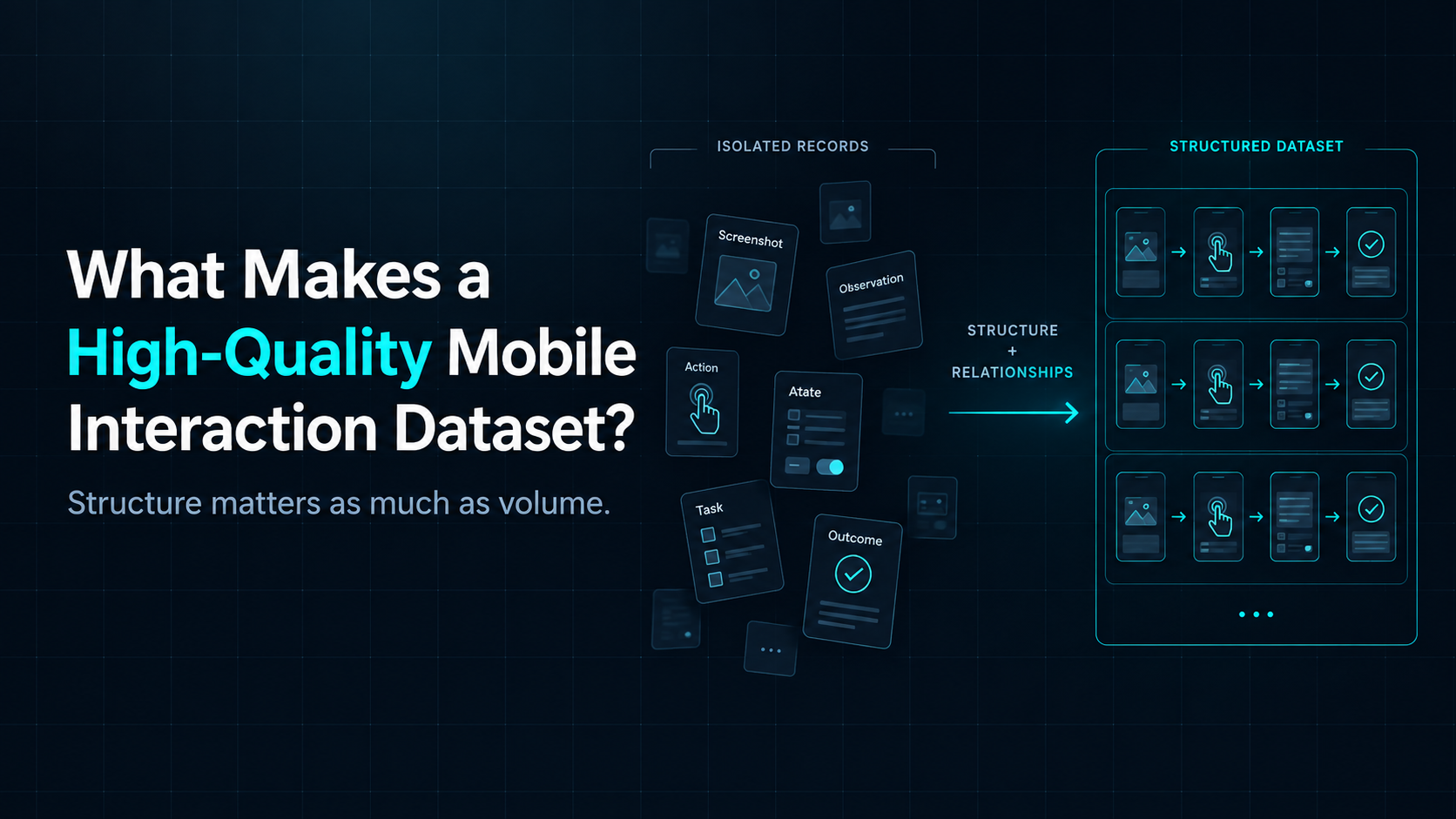 Mobile AI Data
What Makes a High-Quality Mobile Interaction Dataset?
A high-quality mobile interaction dataset is not defined by volume alone. Structure, context, consistency, traceability, and usability determine whether interaction records can be understood and used effectively.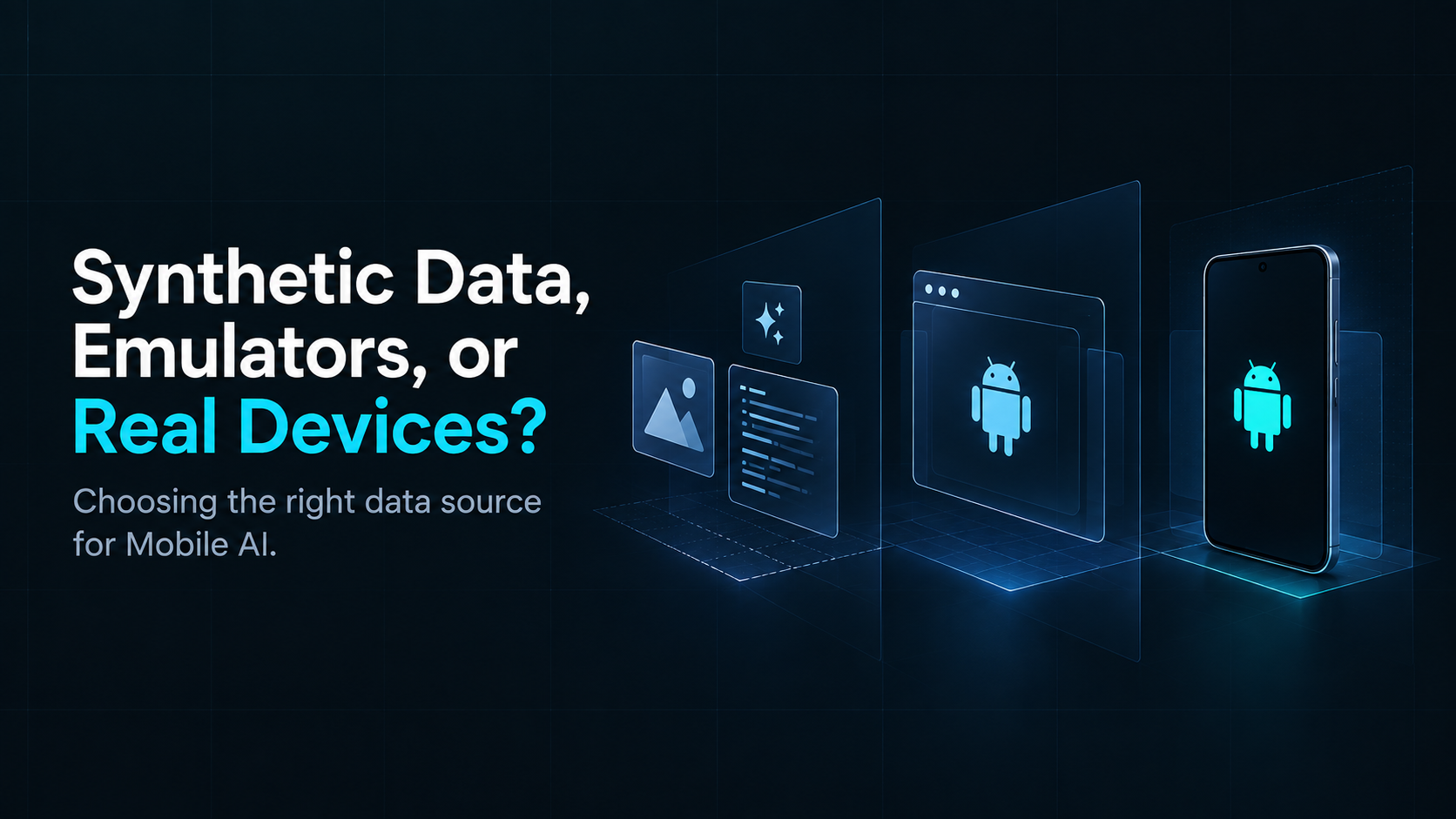 Mobile AI Data
Synthetic Data, Emulators, or Real Devices: Which Data Source Should You Use?
Different environments provide different evidence for Mobile AI workflows. Synthetic data, emulators, and real devices expose different execution contexts.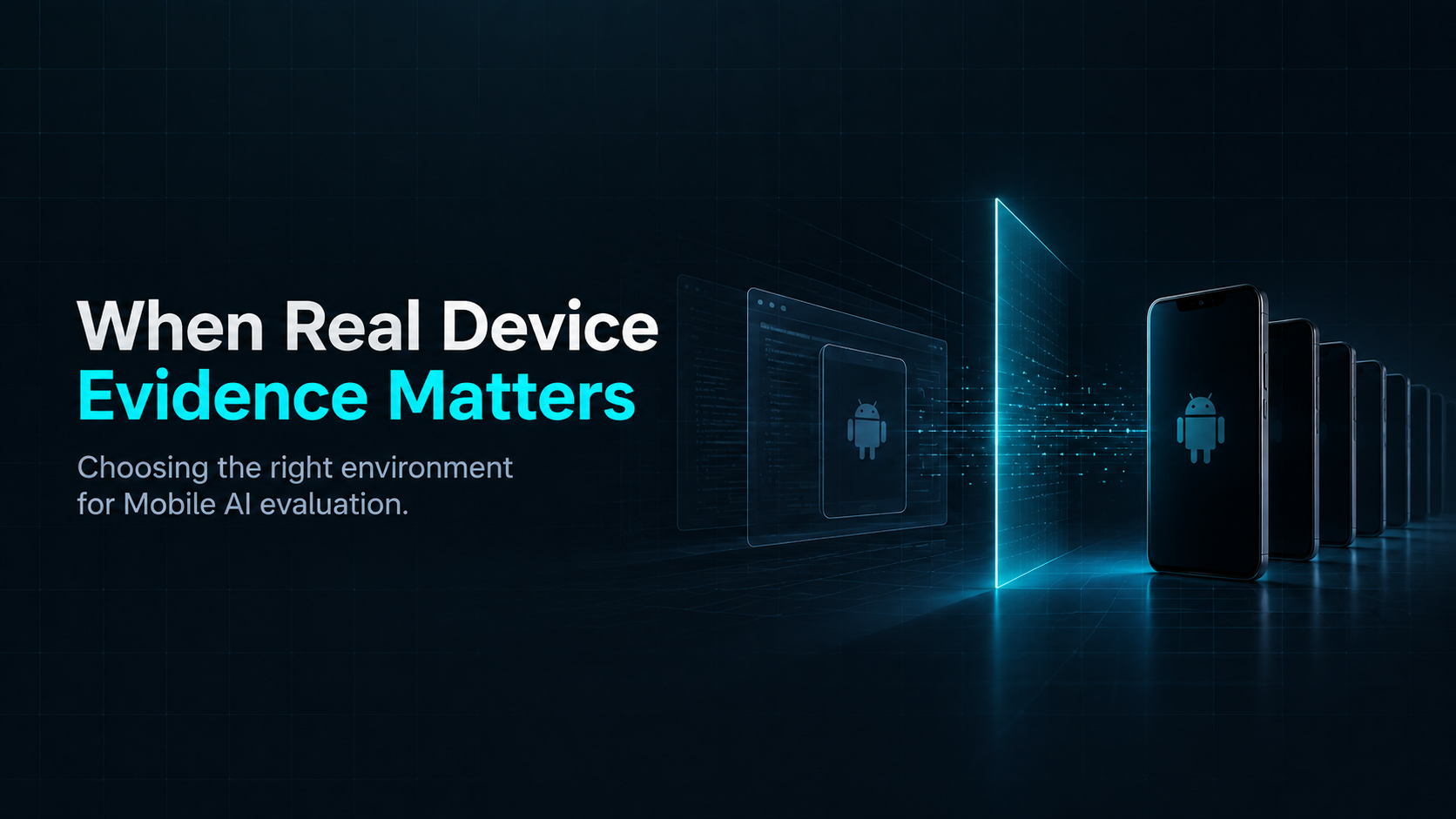 Mobile AI Data
Where Emulators Are Enough—and Where Real Devices Add Value
The environment should match the question. Emulators provide controlled software execution; real devices contribute evidence when physical execution becomes part of what must be observed.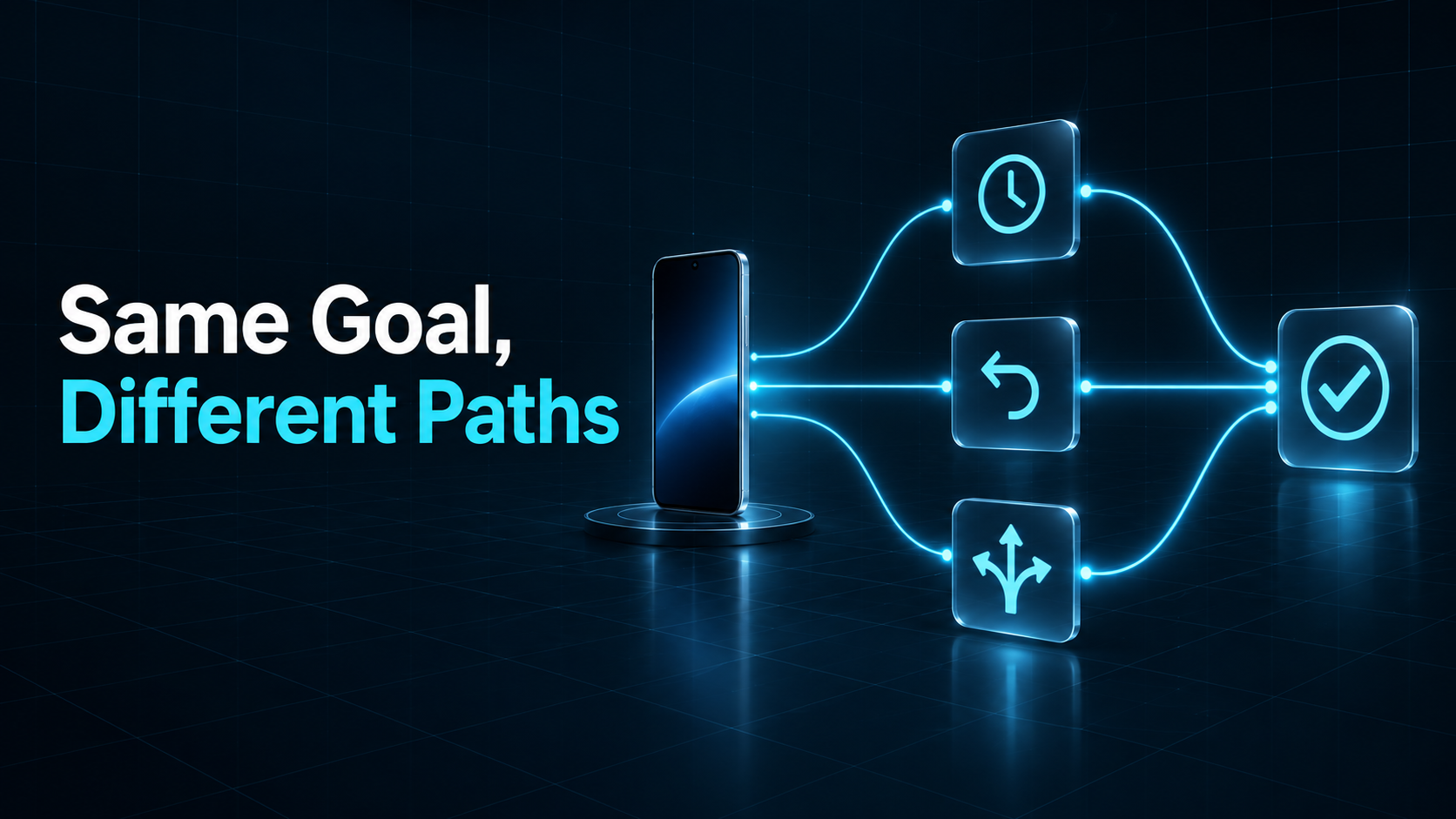 Mobile AI Data
Why Real-World Mobile Behavior Matters in AI Data Collection
The same mobile task can follow different paths. Explore when delayed feedback, interruptions, and permission state create useful evidence about decisions and outcomes.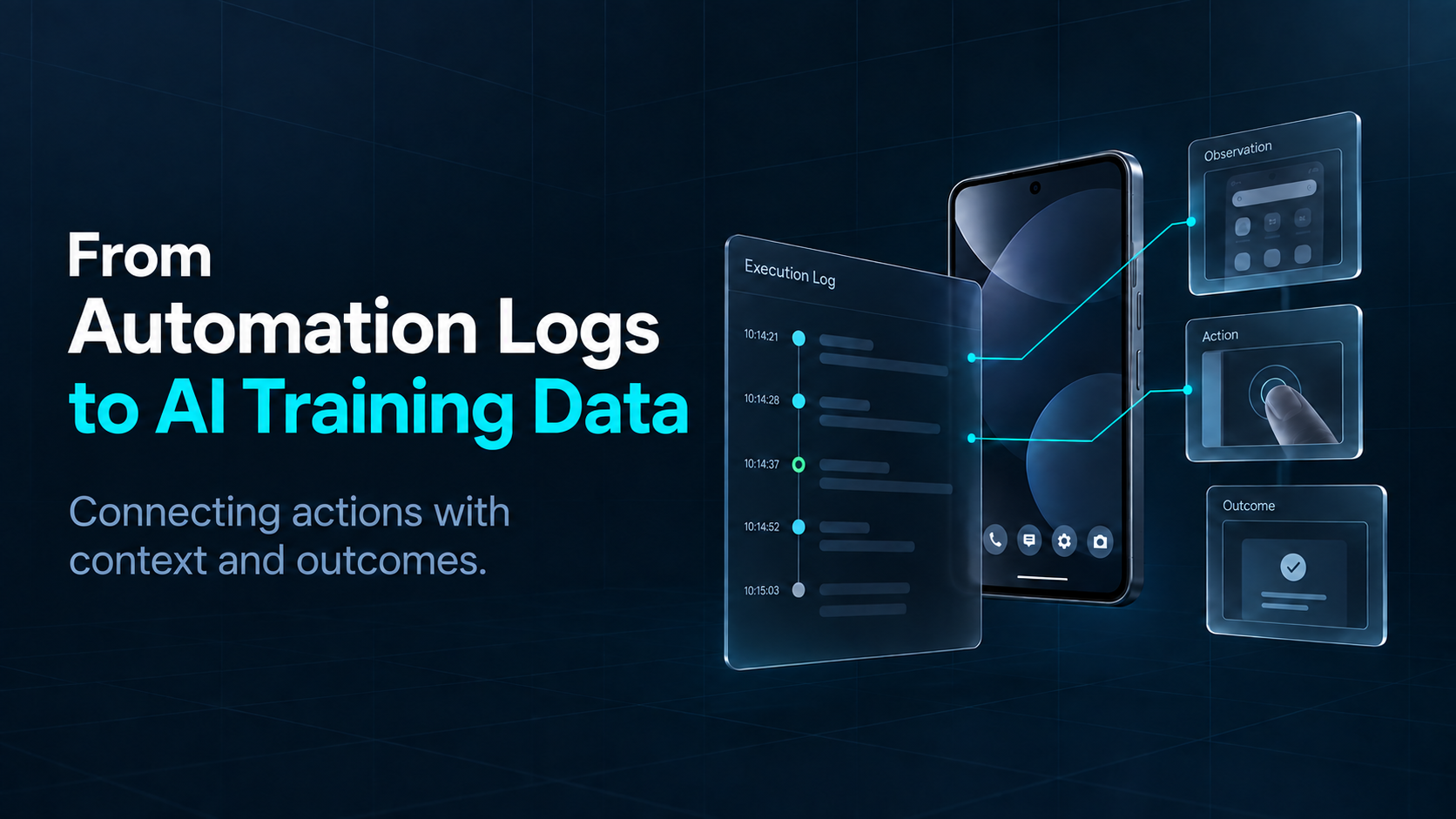 Mobile AI Data
The Hidden Gap Between UI Automation Logs and AI Training Data
A completed automation run does not automatically explain what an agent observed or whether its goal was achieved. Explore the evidence needed to reuse execution records for AI training and evaluation.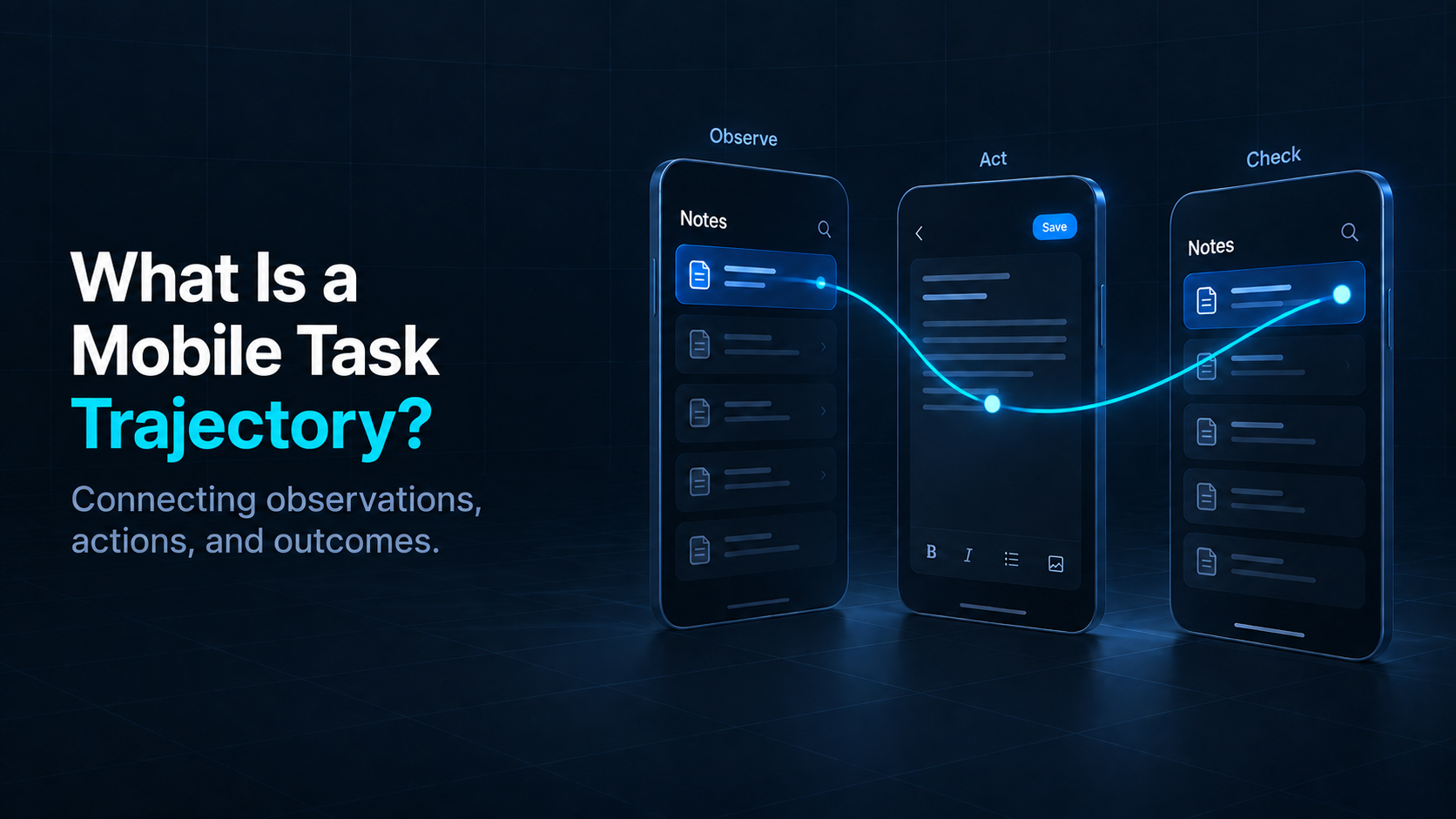 Mobile AI Data
What Is a Mobile Task Trajectory?
A connected account of observations, actions, state transitions, and outcomes within one mobile task attempt.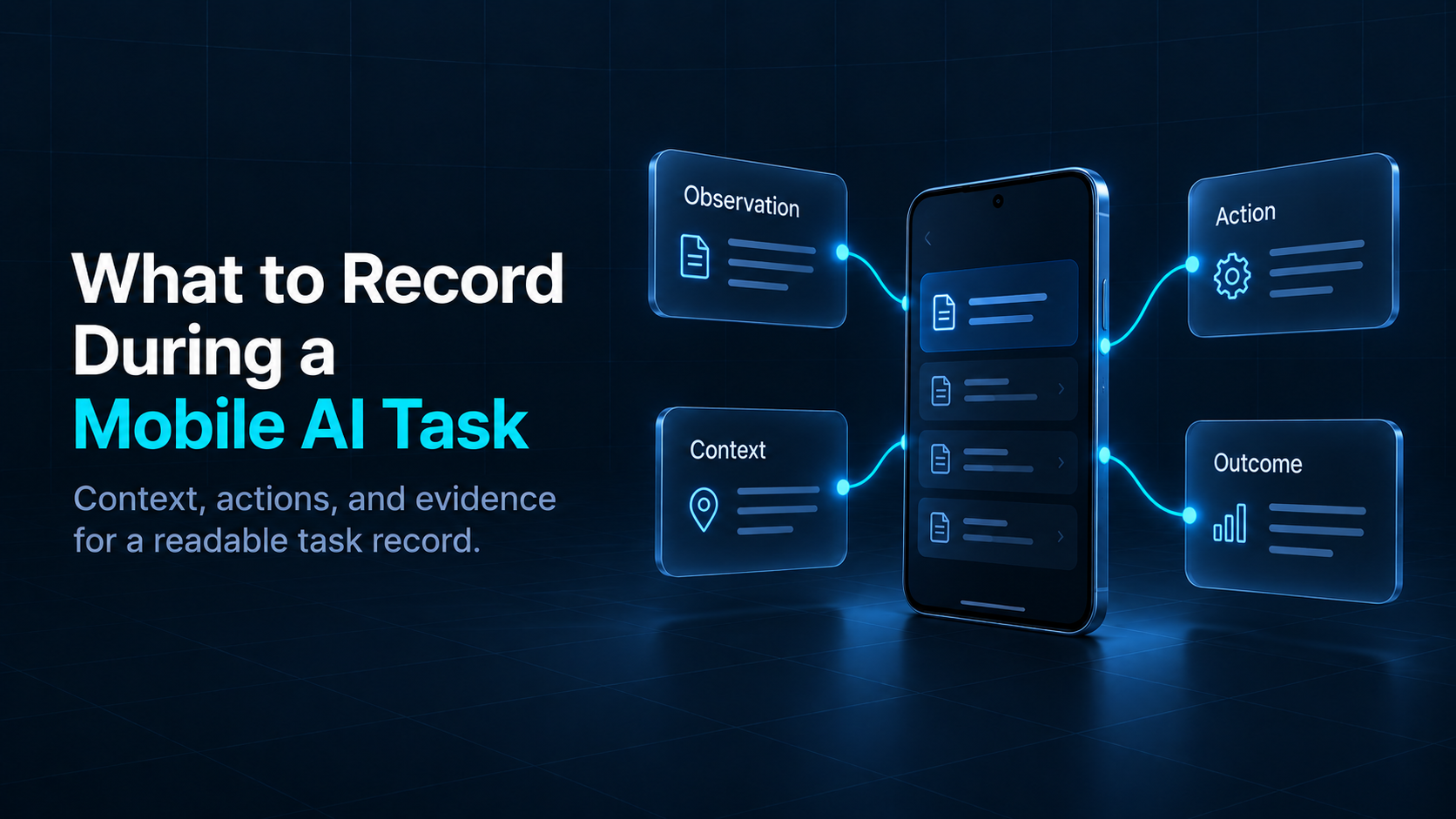 Mobile AI Data
What Should Be Recorded During a Mobile AI Task?
A useful task record preserves the context, sequence, and evidence needed to understand an attempt after it ends.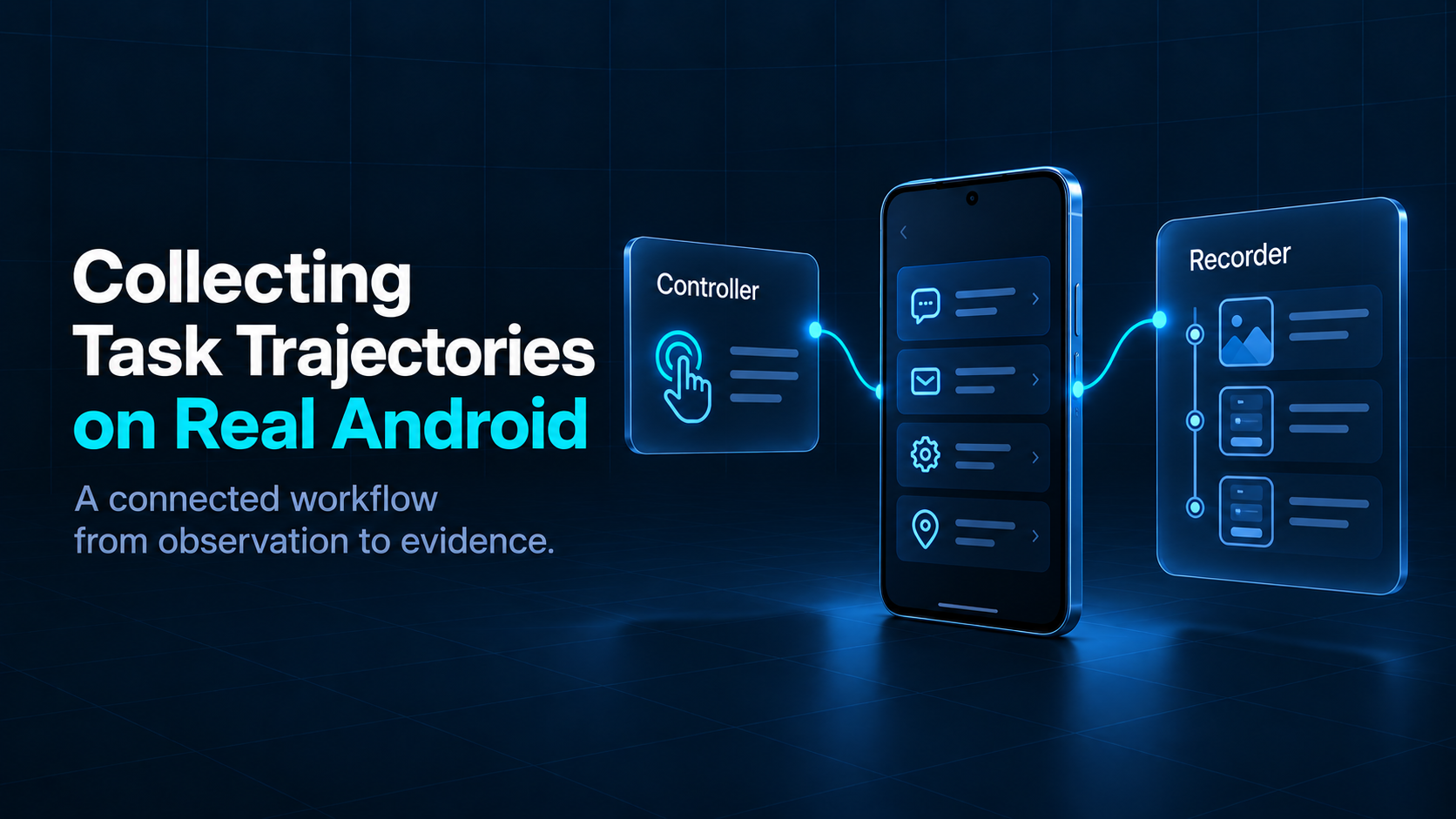 Mobile AI Data
How to Collect Mobile Interaction Trajectories on Real Android Devices
Build a collection loop that keeps device access, observations, actions, and result checks connected throughout one attempt.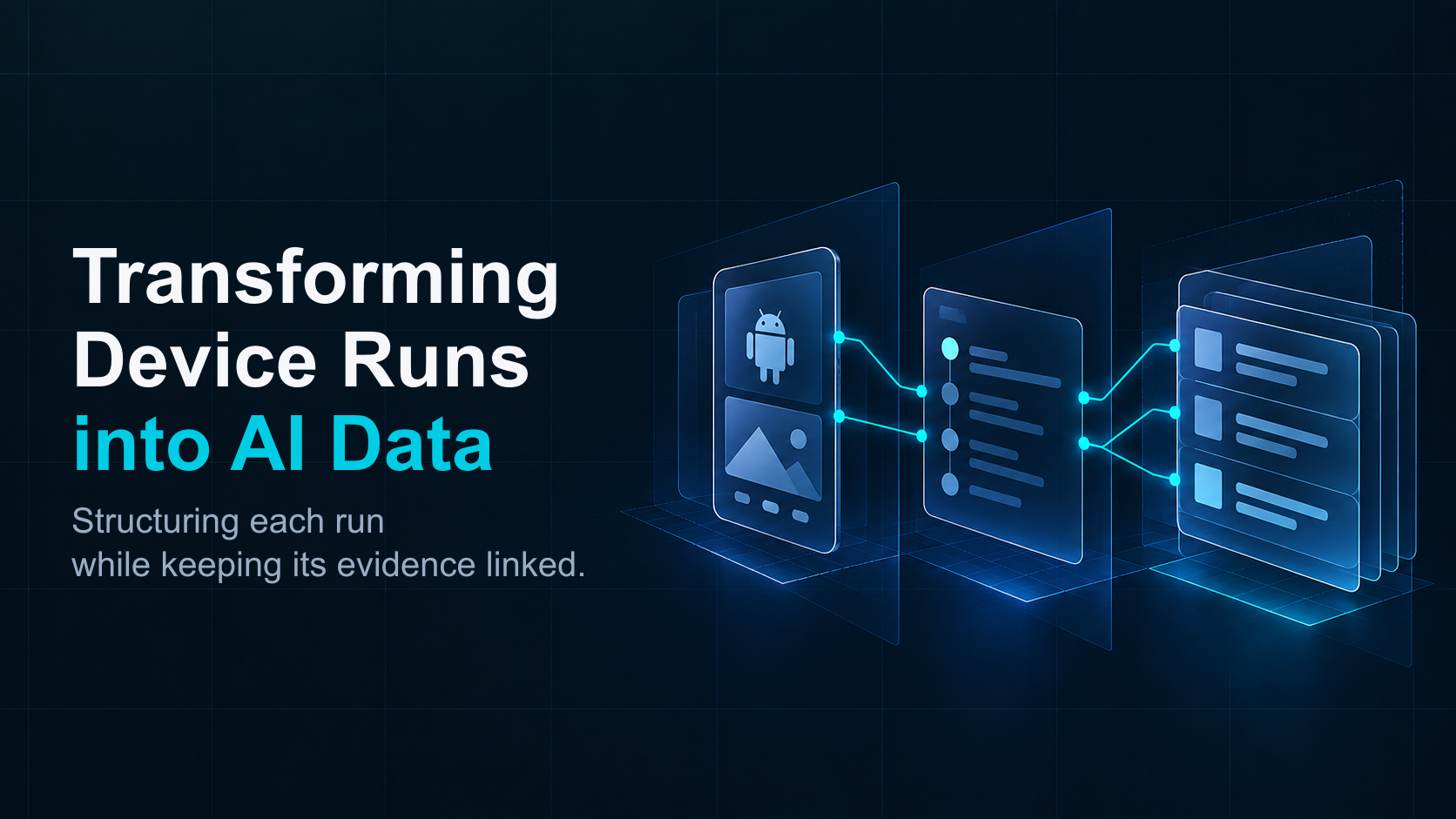 Mobile AI Data
How to Turn Raw Device Runs into Structured AI Data
Turn collected observations, actions, and outcome evidence into traceable records that a downstream workflow can interpret.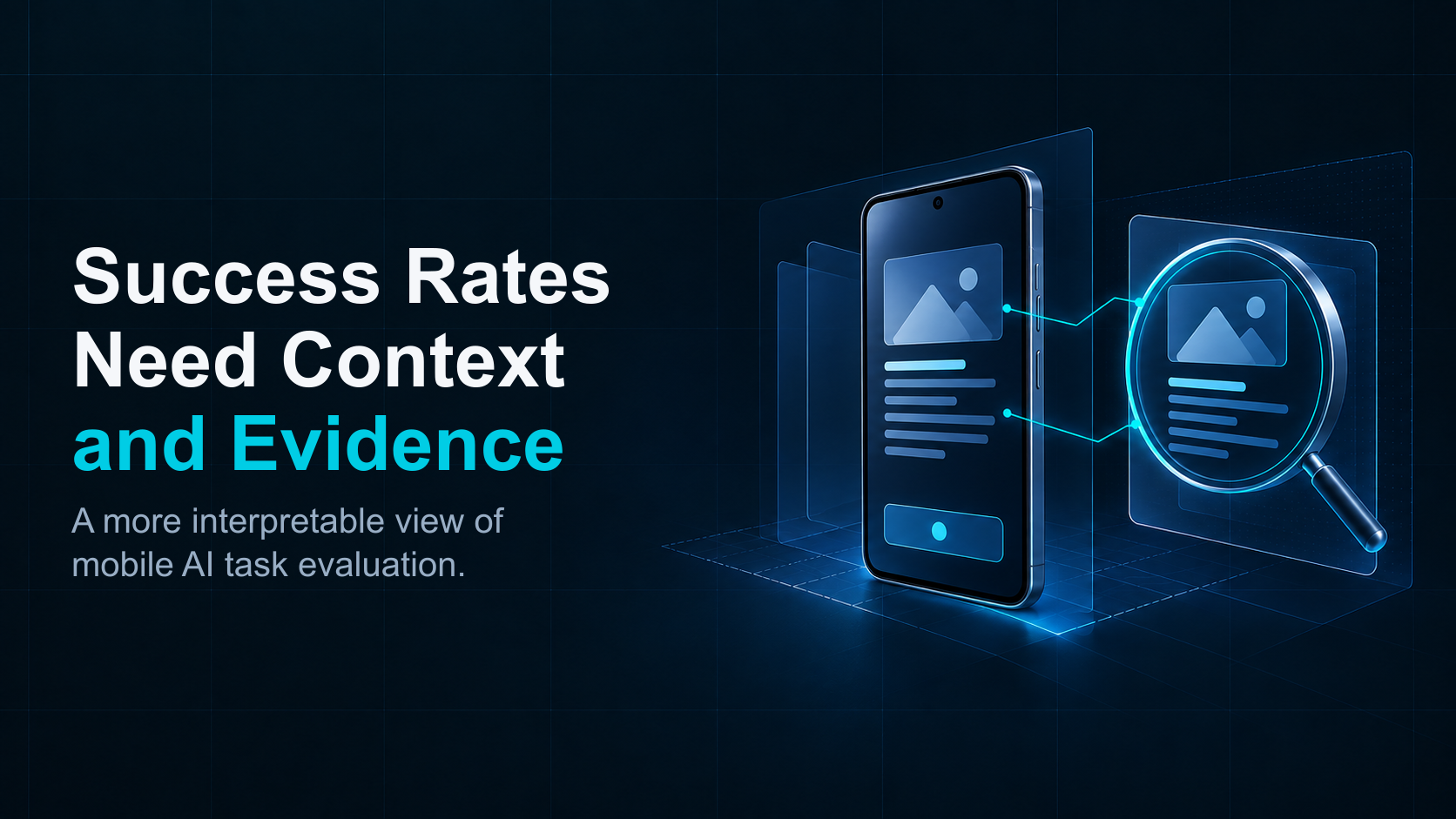 Mobile AI Data
Why Task Success / Fail Is Not Enough for Mobile AI Evaluation
A success rate can summarize outcomes. It cannot, by itself, show what the evaluator checked, whether the available evidence was sufficient, or where an attempt went wrong.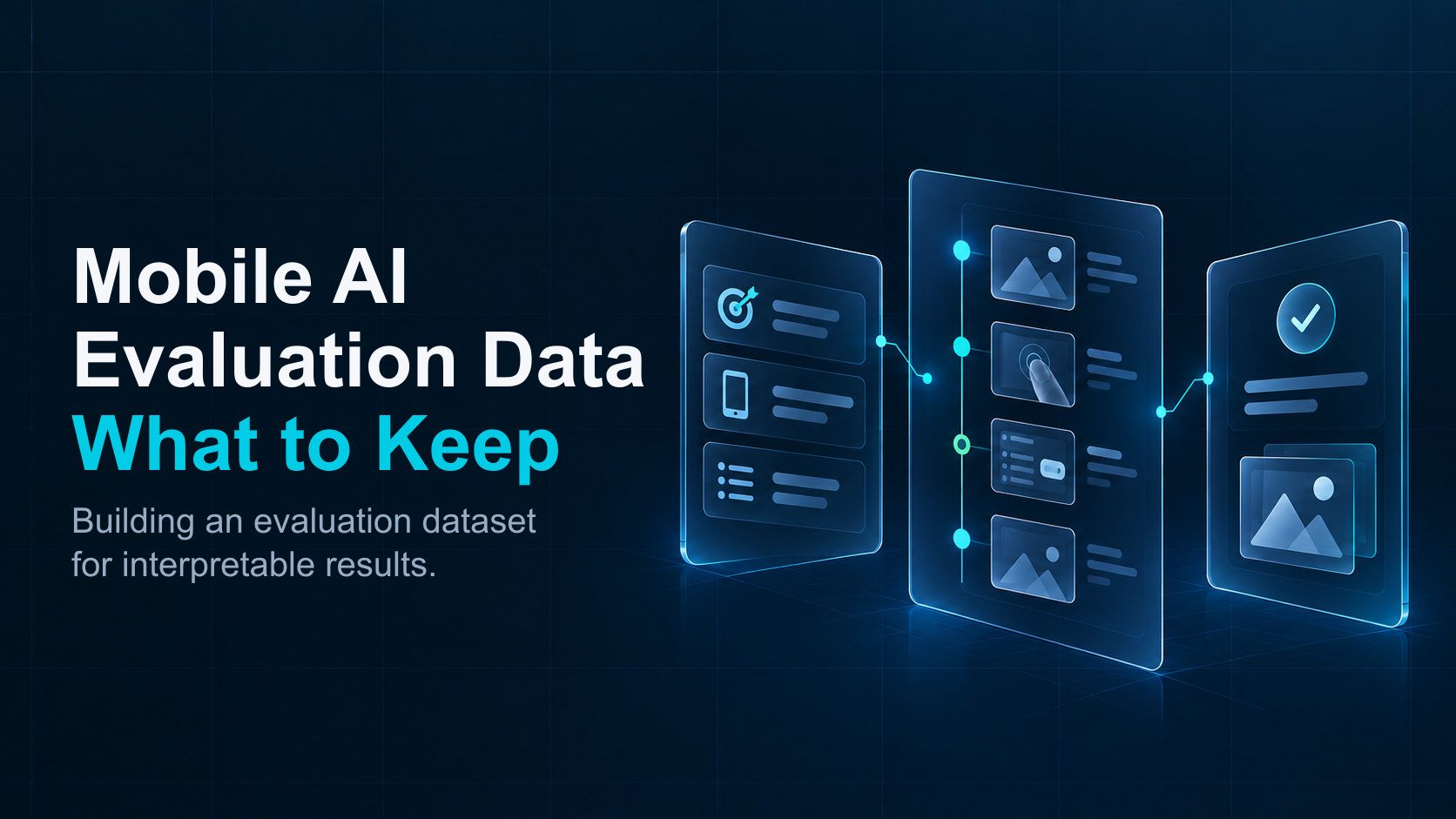 Mobile AI Data
What Should a Mobile AI Evaluation Dataset Contain?
A result is easier to interpret when the dataset preserves more than a task prompt and a success label. A reviewer needs enough context to understand what was attempted, what the system could observe, how the outcome was checked, and which conditions shaped the result.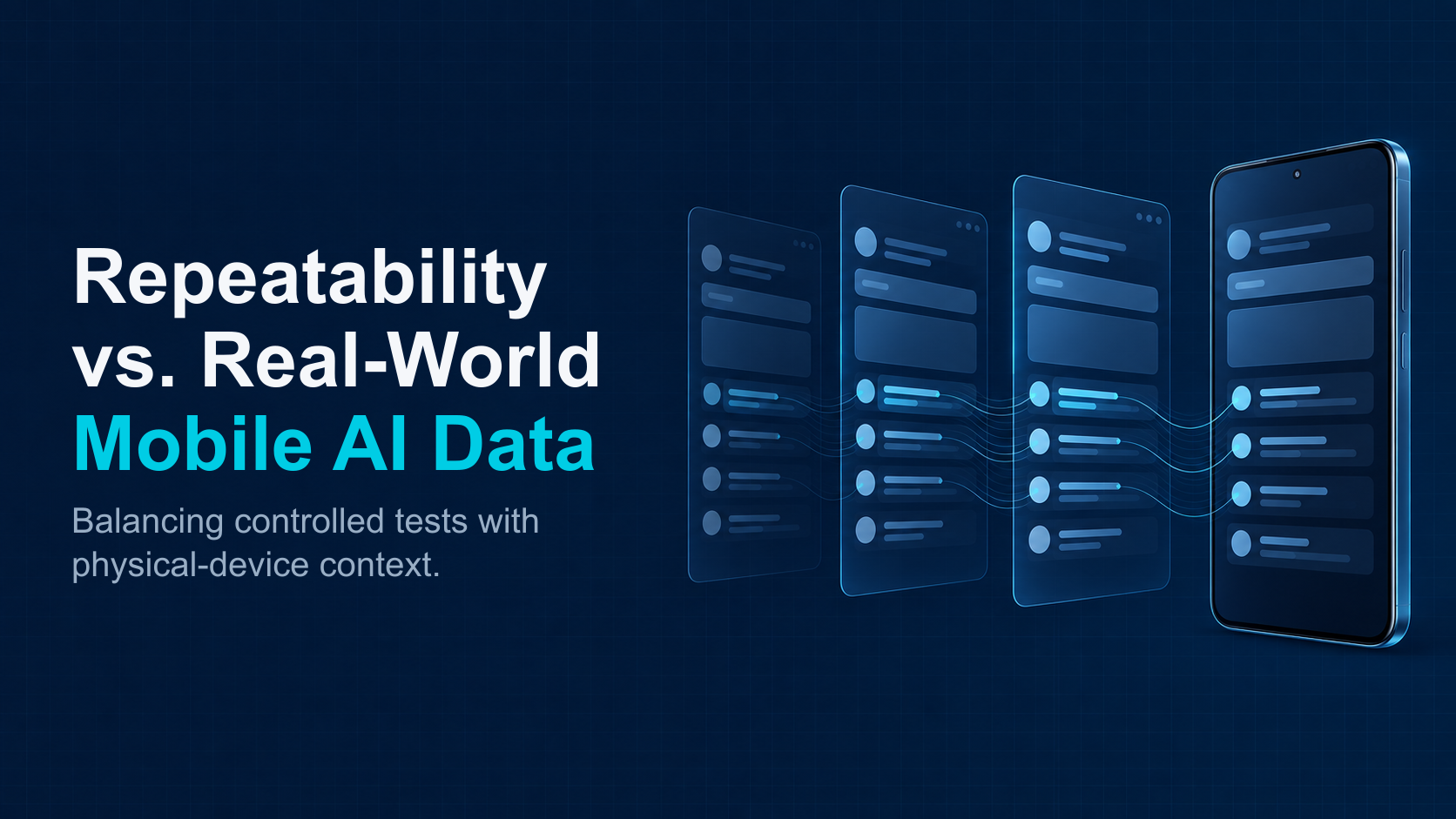 Mobile AI Data
Repeatability vs. Reality in Mobile AI Data Collection
Emulators can make defined conditions easier to repeat. Physical Android devices expose behavior in a real device context. A useful evaluation plan decides what each run is meant to establish.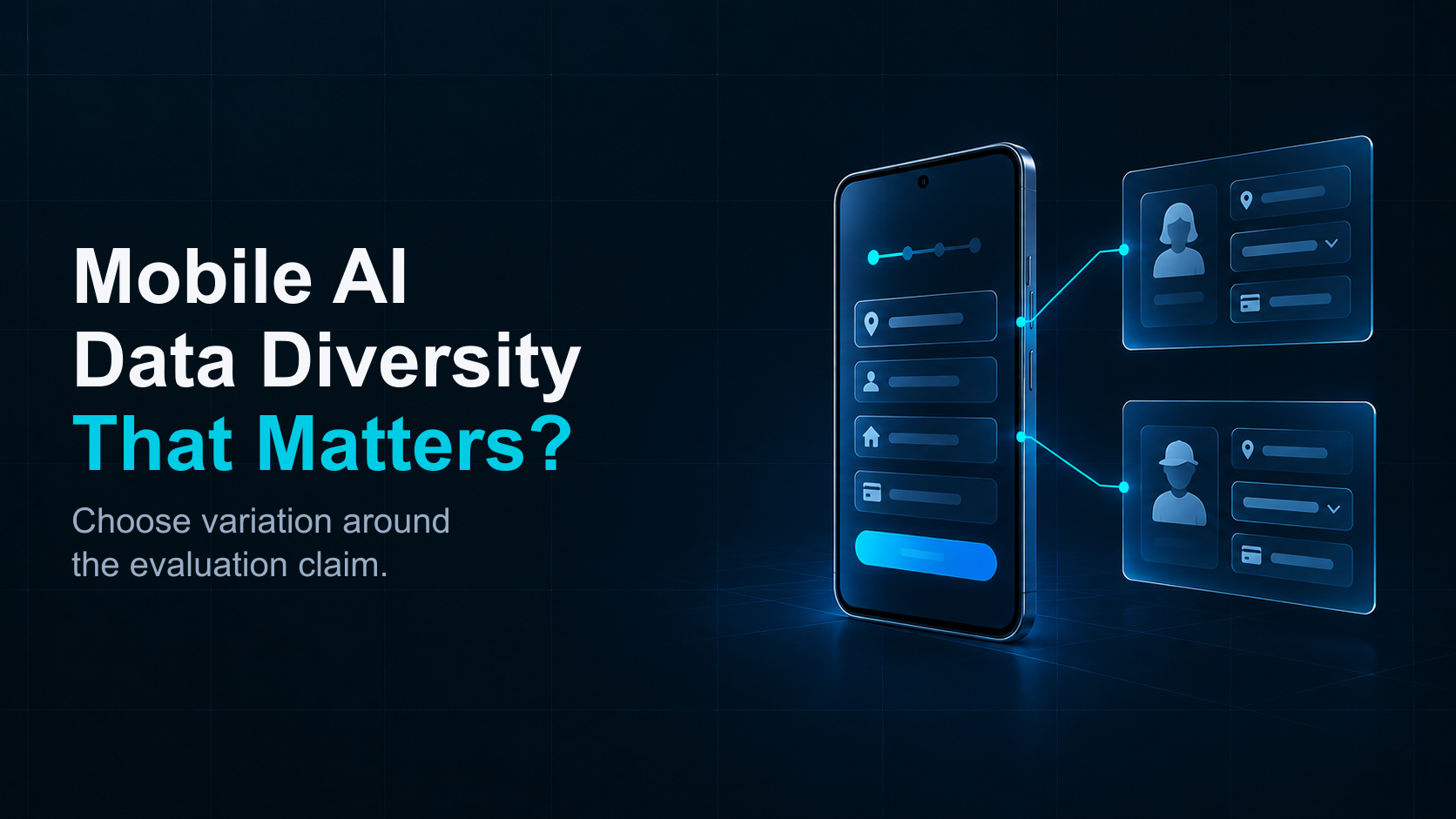 Mobile AI Data
What Kind of Diversity Actually Matters in Mobile AI Data?
More devices and more scenarios do not automatically make an evaluation more representative. The useful question is which differences could change the task, the evidence, or the conclusion.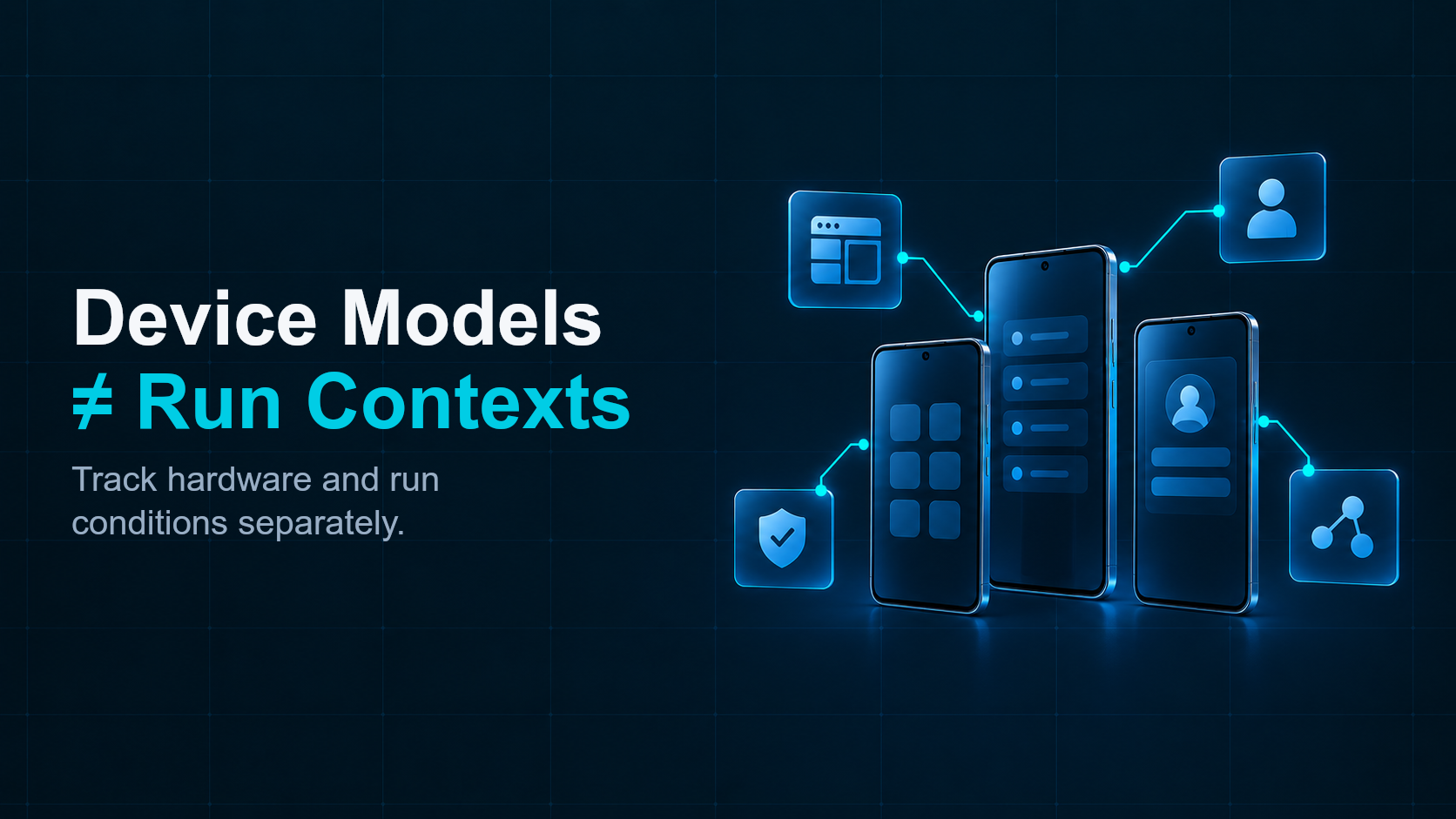 Mobile AI Data
Device Diversity vs. Environment Diversity: They Are Not the Same Thing
More device models can broaden hardware coverage. They do not automatically broaden the conditions under which a task was run.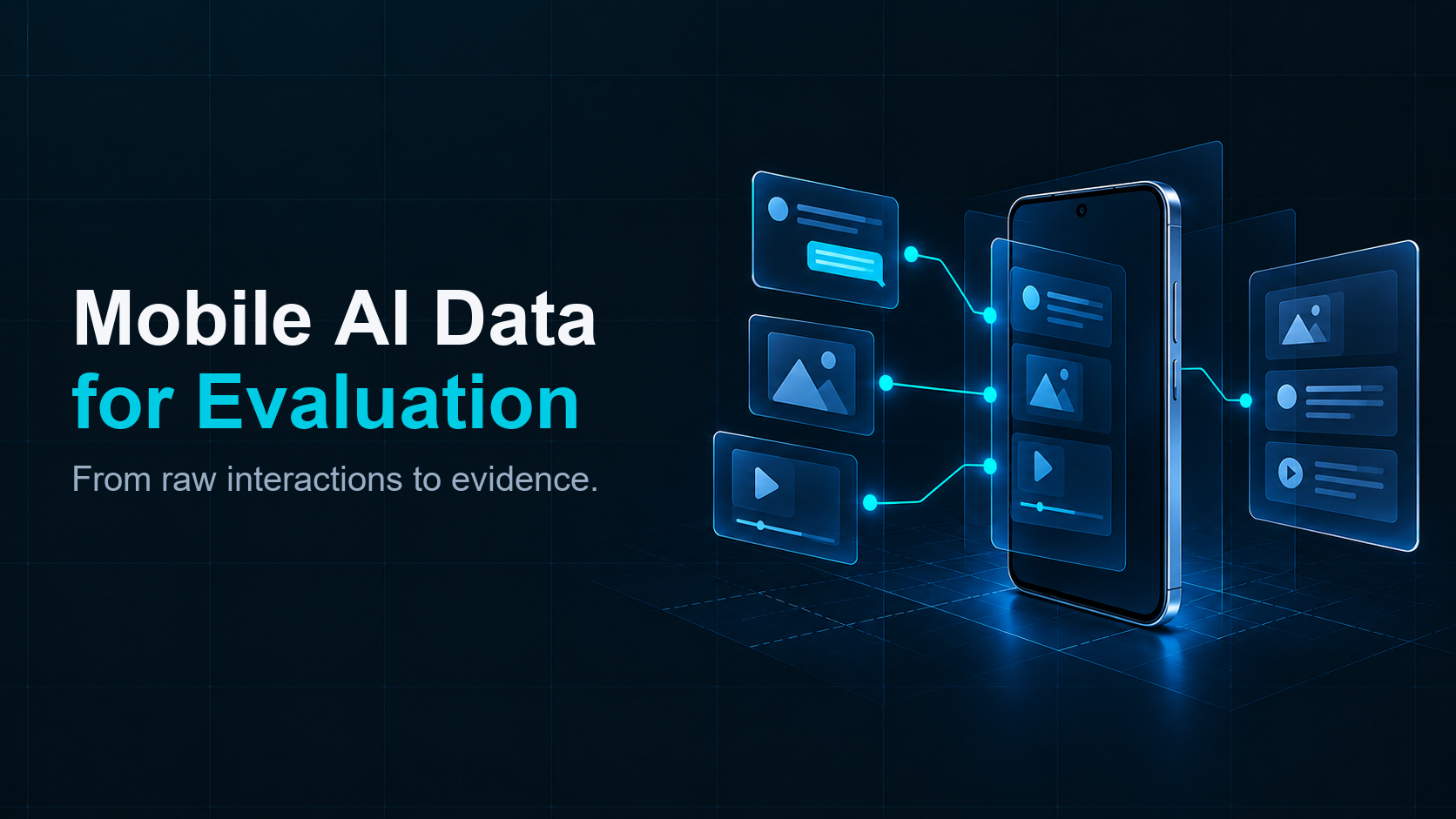 Mobile AI Data
From Raw Interactions to Evaluation-Ready Mobile AI Data
A useful dataset connects a defined task to an inspectable execution trace, a defensible outcome check, and a conclusion whose scope is clear. Mobile AI Infrastructure
Why 10 Phones on a Desk Are Not a Data Collection Infrastructure
A device shelf can be a useful test rig. Infrastructure begins with the repeatable system around each run: known devices, controlled assignment, recoverable state, and evidence that stays attached to the attempt. Mobile AI Infrastructure
What Makes a Real-Device Data Collection System Programmable?
A programmable device pool exposes clear resources, run states, retries, and evidence across physical execution—not just a way to send commands. Mobile AI Infrastructure
Device State Management: The Overlooked Problem in Mobile AI Data Collection
A run can use the right device and still produce misleading data if its starting state is unknown—or if one attempt quietly changes the next attempt’s starting point. Mobile AI Infrastructure
How APIs Connect AI Data Pipelines to Physical Android Devices
An API connection is only the entry point. A useful pipeline also has to identify the device, route the work through the right channel, and return evidence that stays connected to the run.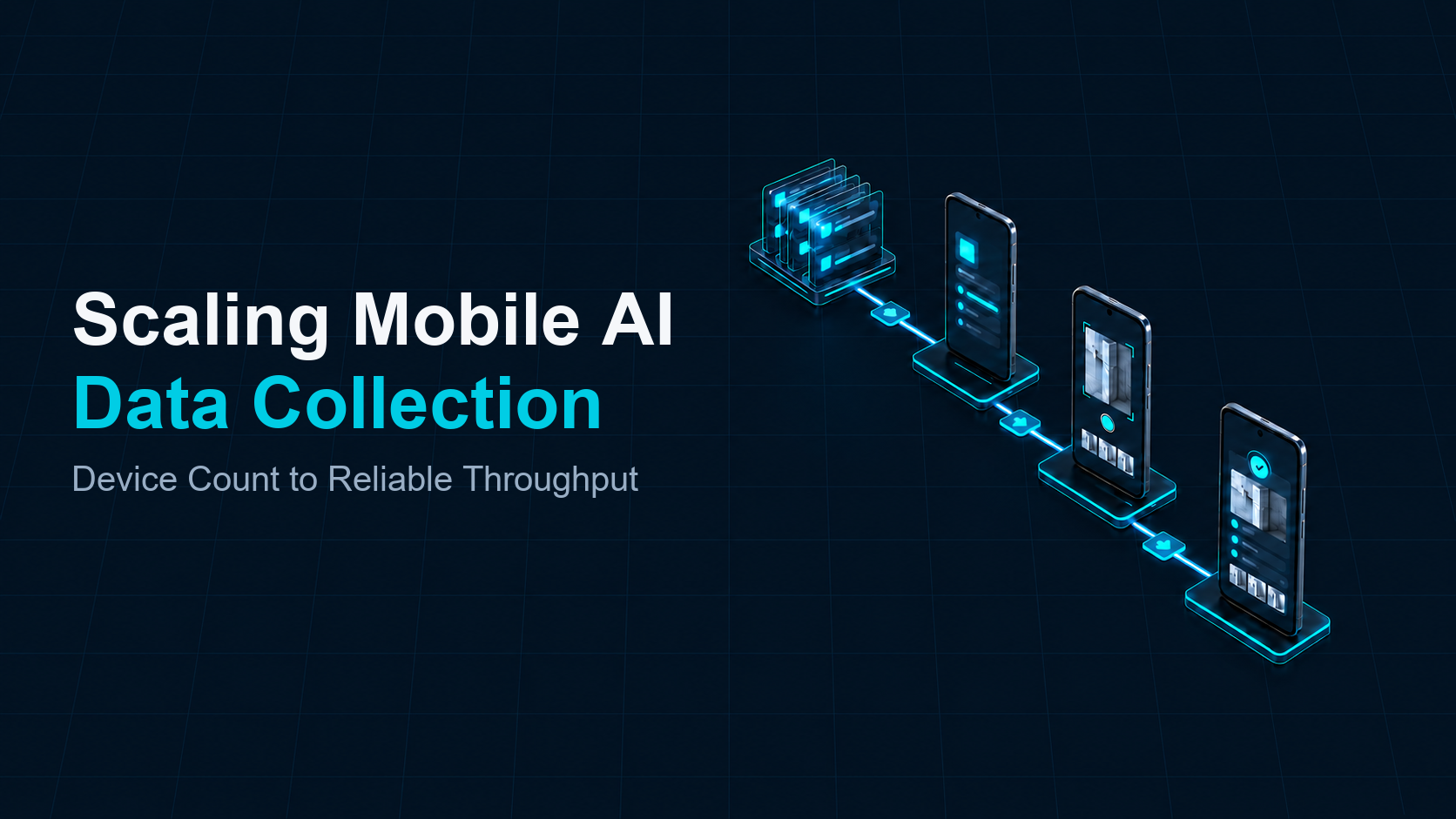 Mobile AI Infrastructure
Scaling Mobile AI Data Collection: From Device Count to Reliable Throughput
Adding phones is the visible part of scaling. The harder work is keeping devices schedulable, runs recoverable, and evidence connected as the workload grows. Mobile AI Infrastructure
Choosing Real-Device Infrastructure for Mobile AI: Public Cloud, Dedicated Fleets, or Both?
Public device clouds and dedicated fleets can complement each other. Match access to workload, with strict privacy requirements treated as a constraint.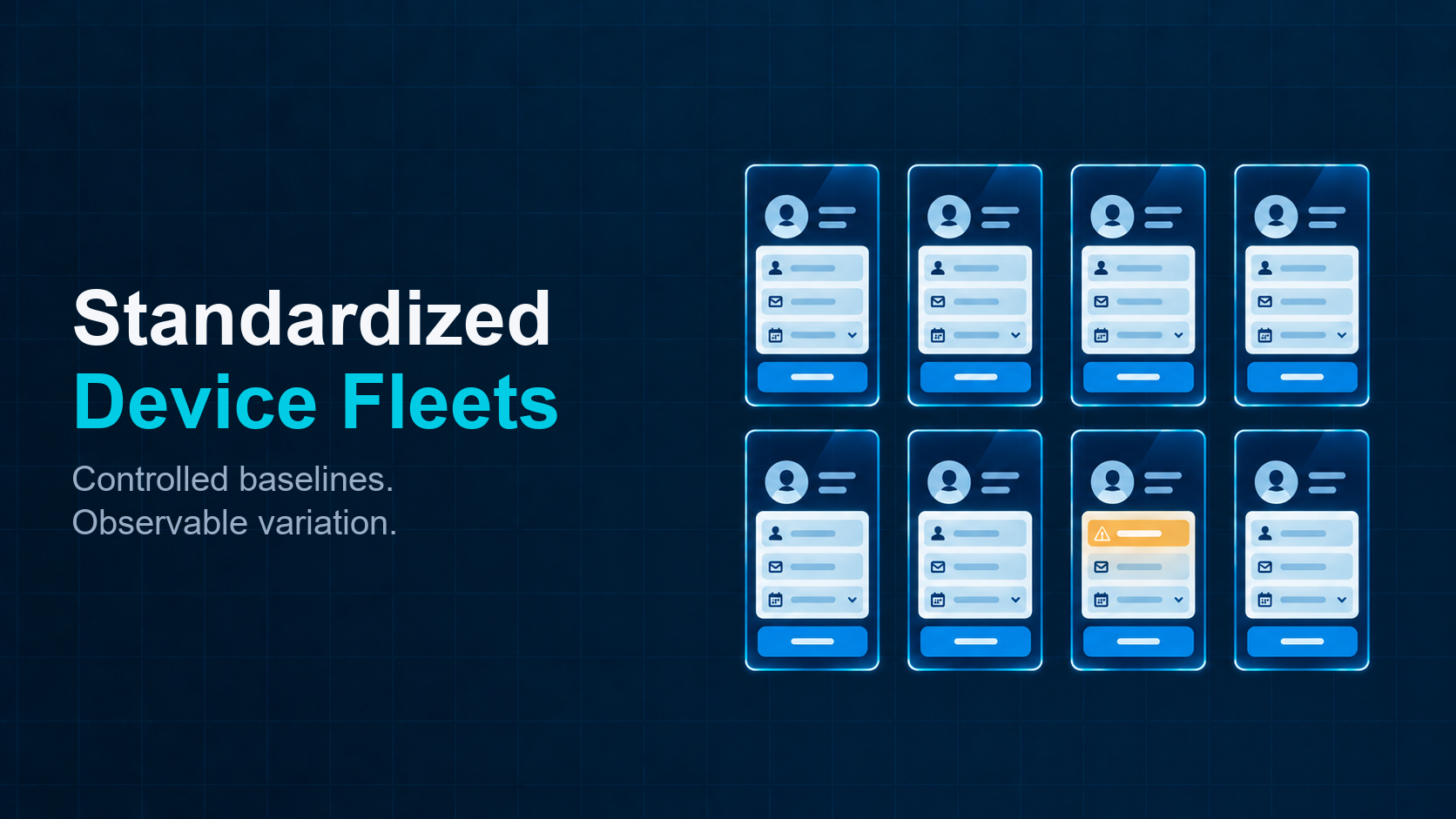 Mobile AI Data Collection
Why Standardized Device Fleets Can Improve Data Collection Consistency
Controlled baselines. Observable variation.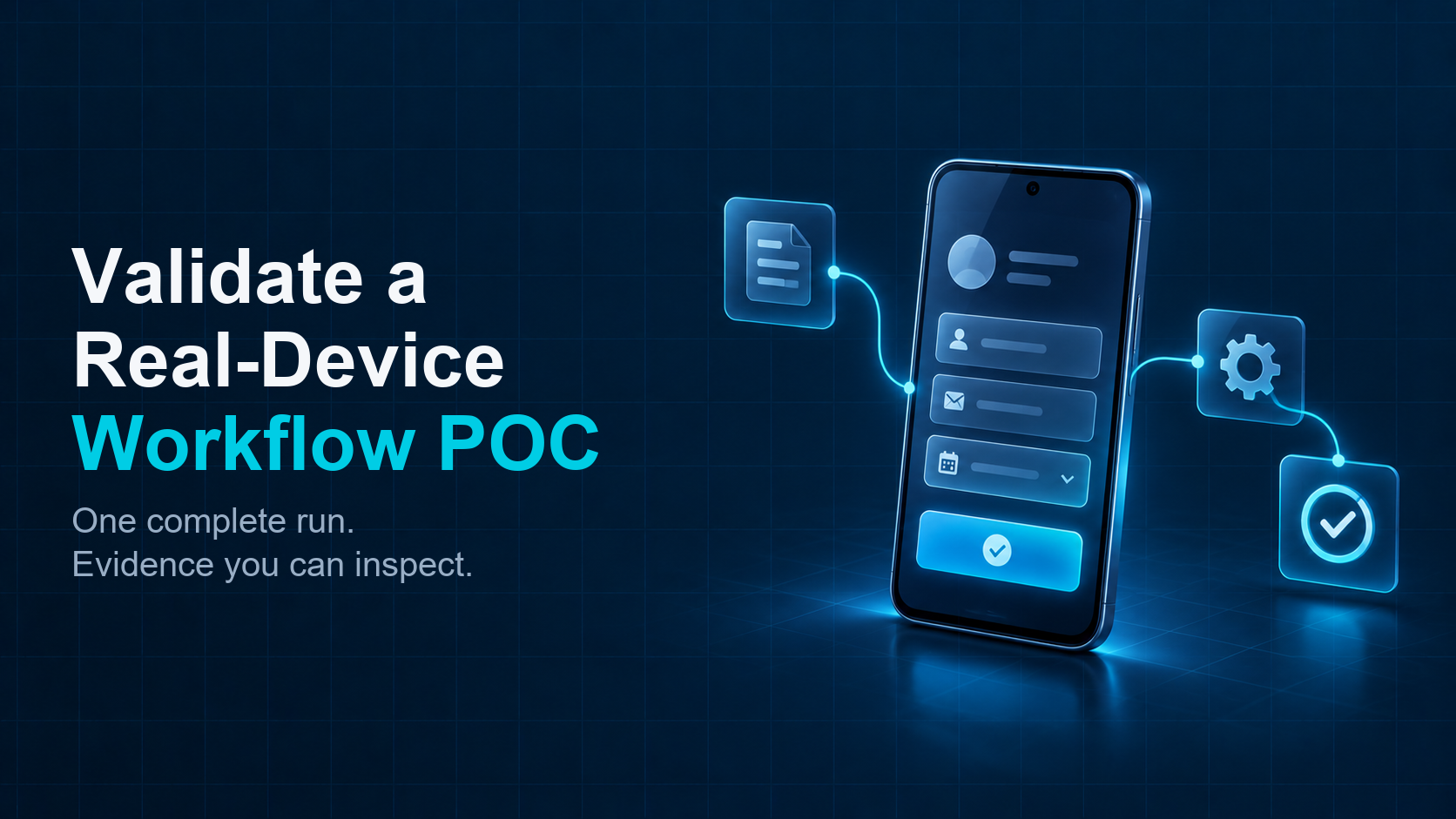 Mobile AI Infrastructure
How to Validate a Real-Device Mobile AI Data Workflow with a Small POC
A small proof of concept should test one complete, inspectable workflow—not claim to prove an agent or infrastructure at scale.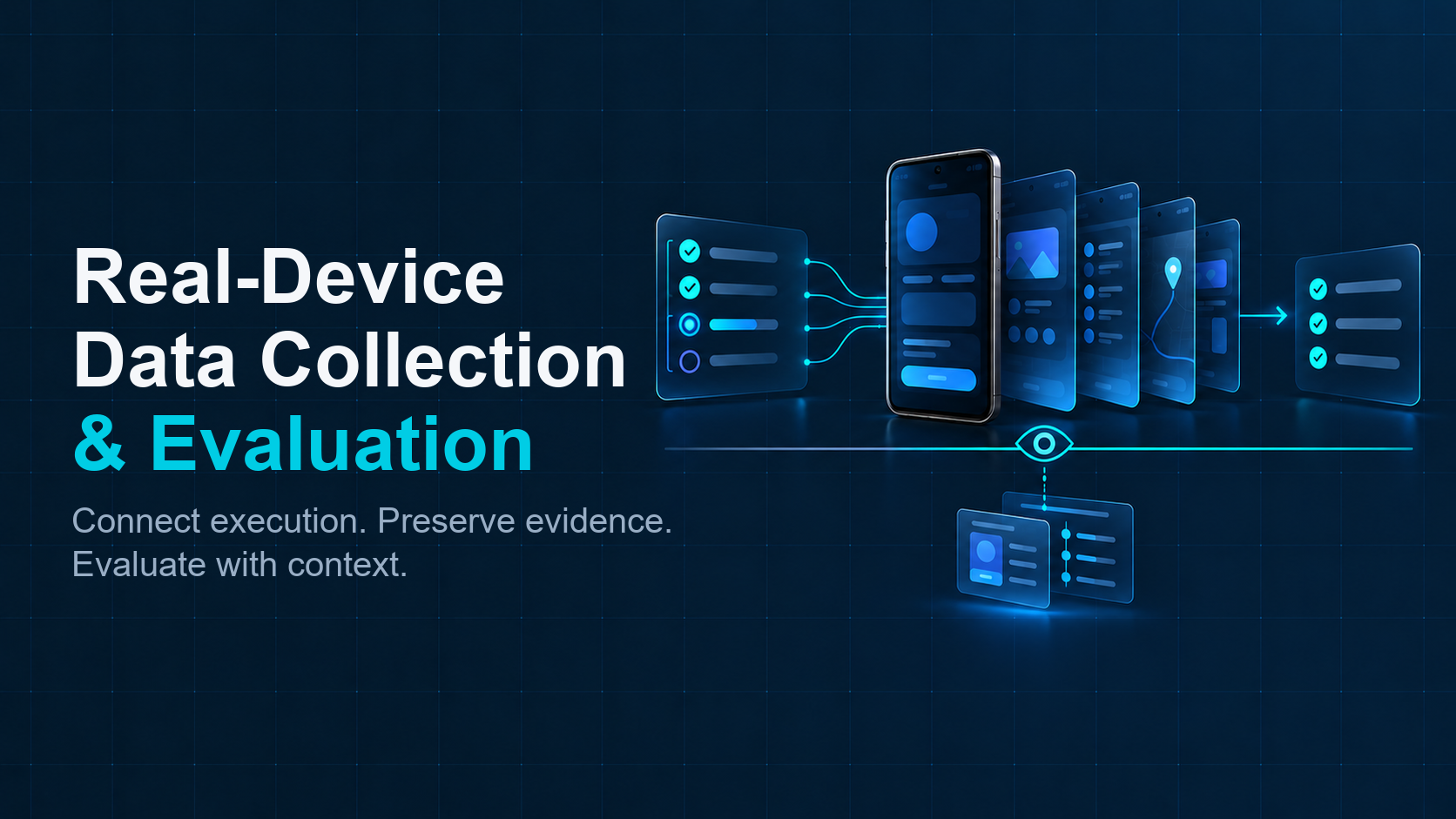 Mobile AI Infrastructure
Building a Real-Device Data Collection & Evaluation Layer for Mobile AI
A useful layer connects physical Android execution to task orchestration, evidence, and evaluation while fitting into the systems a team already uses.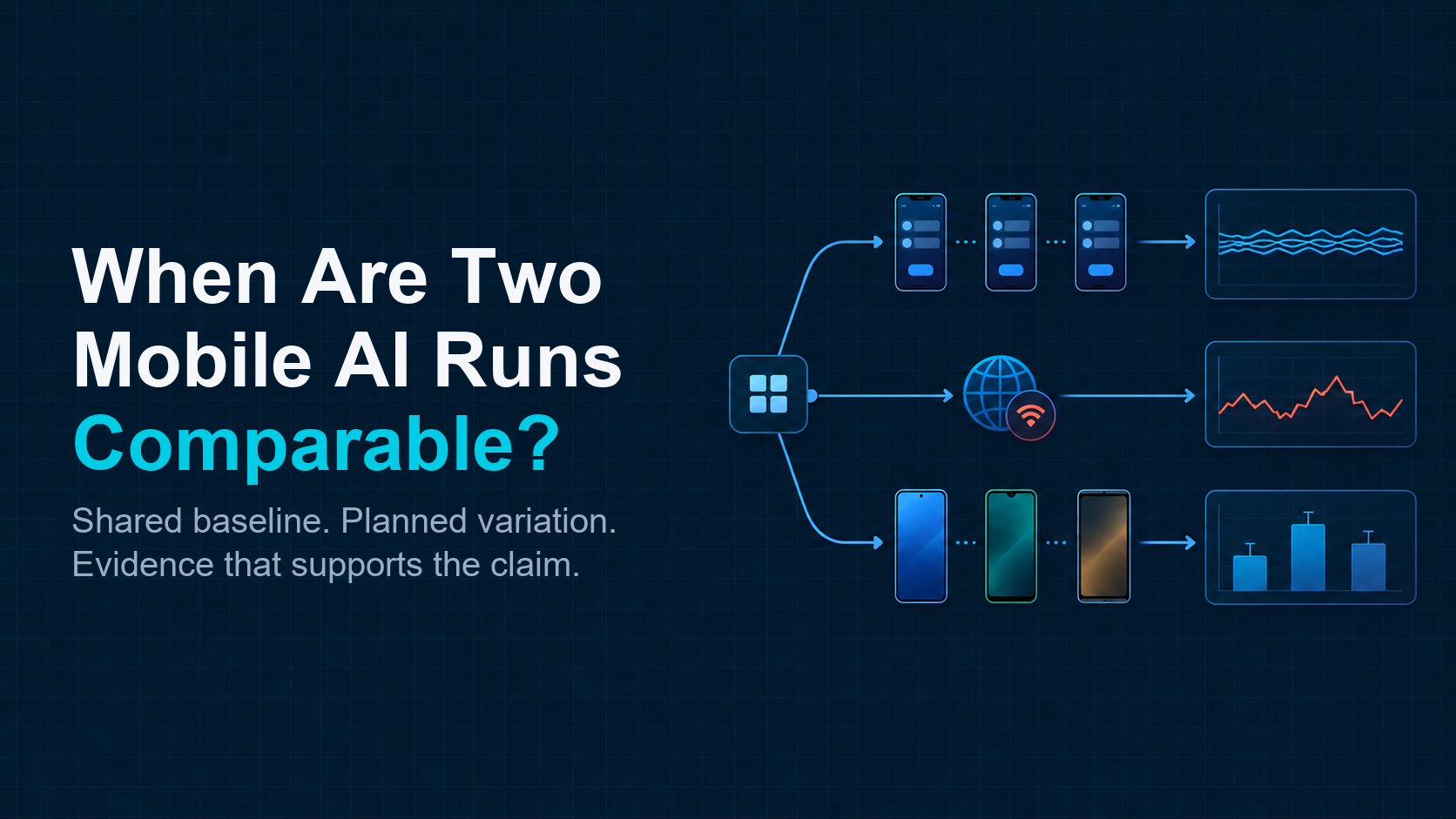 Mobile AI Infrastructure
When Are Two Mobile AI Runs Comparable?
A meaningful comparison starts with a shared question, a defined baseline, and a clear record of what changed.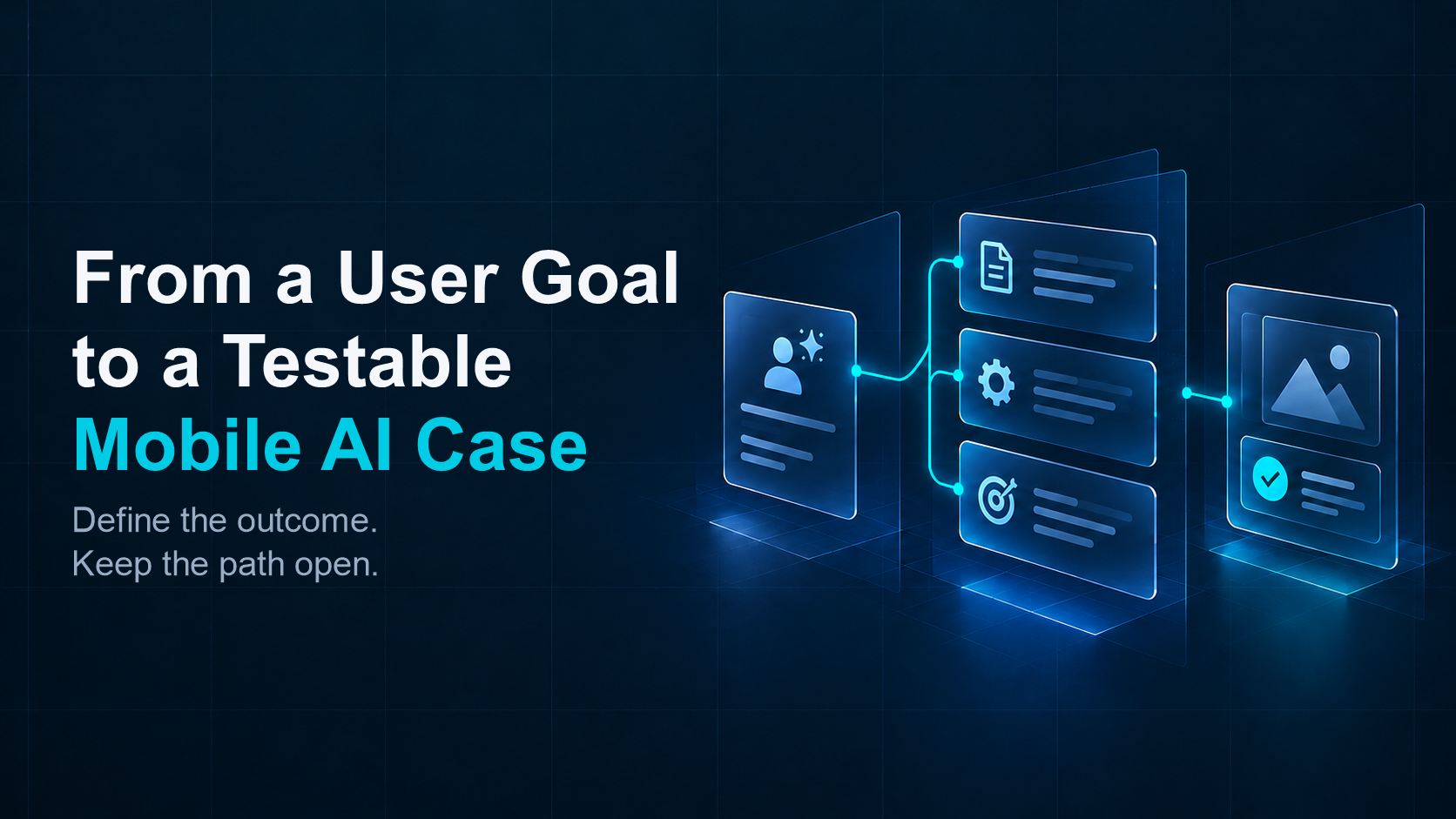 Mobile AI Infrastructure
From a User Goal to a Testable Mobile AI Case
A useful case makes the requested outcome, starting context, and evidence clear without prescribing every action the agent must take. Mobile AI Infrastructure
How Should You Size a Real Android Device Pool?
Estimate from attempt demand, device-occupancy time, and task eligibility—not from the device count alone.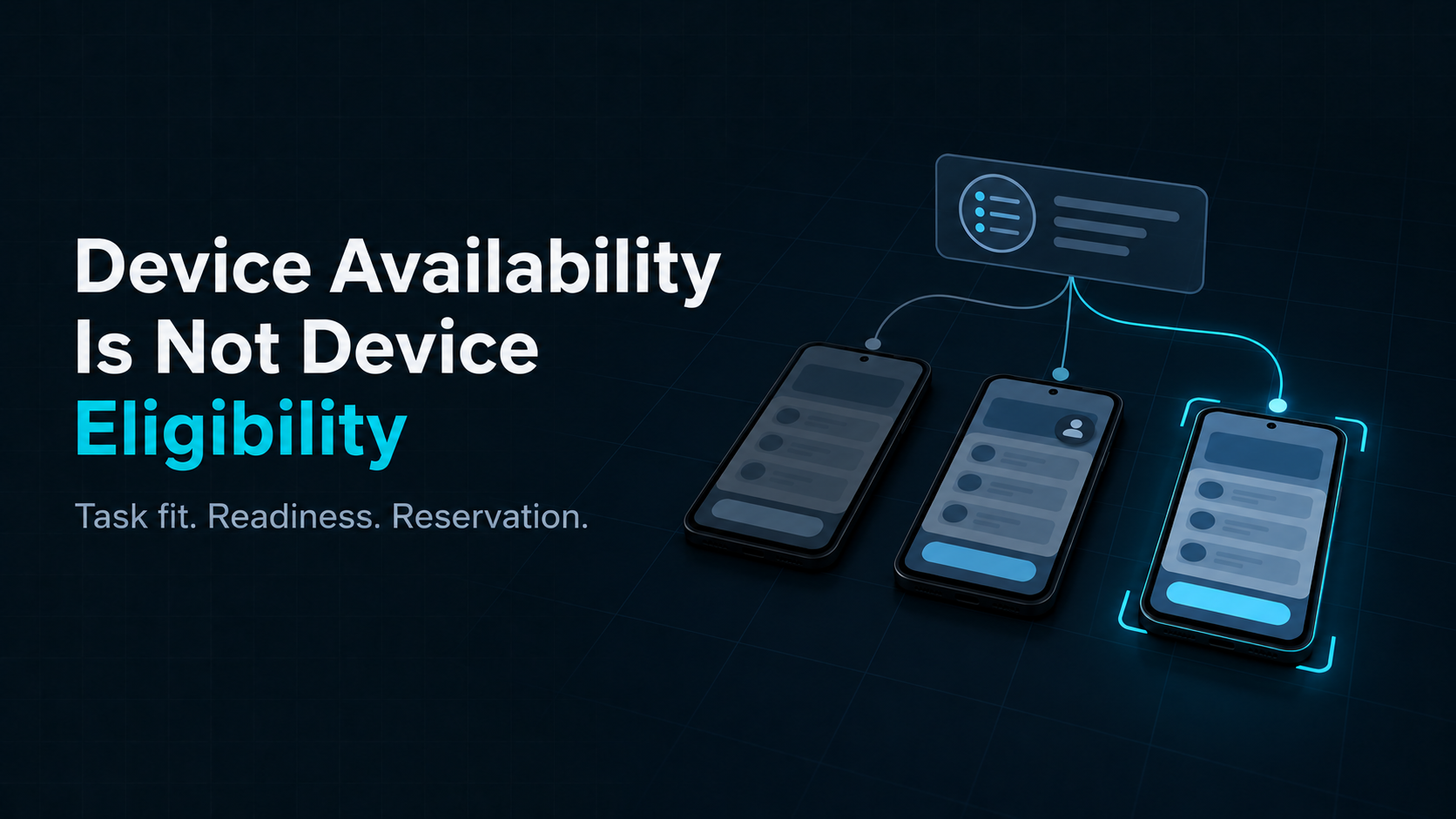 Mobile AI Infrastructure
Device Availability Is Not Device Eligibility
A device is eligible for a task when its profile satisfies that task’s requirements. Whether it is ready and can be reserved now is a separate decision. Mobile AI Infrastructure